On Location
Nadur, Gozo, Malta

Hello, I am currently on location.
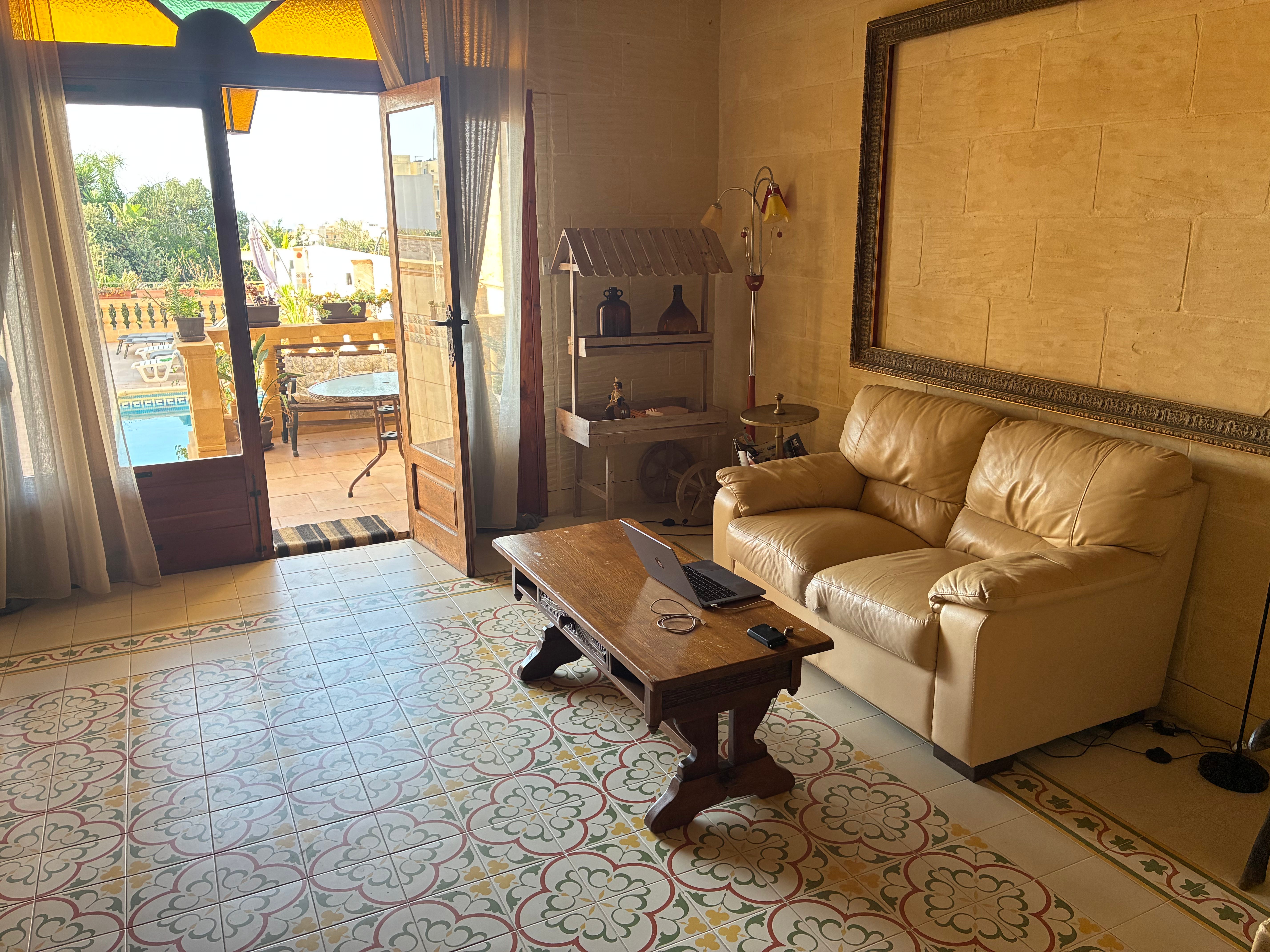
On location is a tan leather couch that I have been slowly melting into since about nine this morning while my friend sits across from me at the kitchen table on a video call negotiating the construction of laboratories on another continent, which today means explaining to someone how to fill in a form over screen share so it can go up the chain for the CEO’s approval, and the children next door are entering a swimming pool at a rate of roughly one jump every seventeen seconds, and the neighbour’s dog barks every thirty-seven, and it is thirty degrees, and I think I am in the early stages of heatstroke having calibrated my body for Tasmanian summers and then recalibrated it for Dutch ones, neither of which prepares you for any of this, so I am typing with wet wrists against the laptop and one hand hovering above it for airflow.
But the phrase does the work, which is the entire point of the phrase. On location sounds like a job. It has sounded like a job for about a decade now, ever since a stranger in Albuquerque made it look like a reasonable way to spend a life, and it cost me one stamp I had already bought for something else.
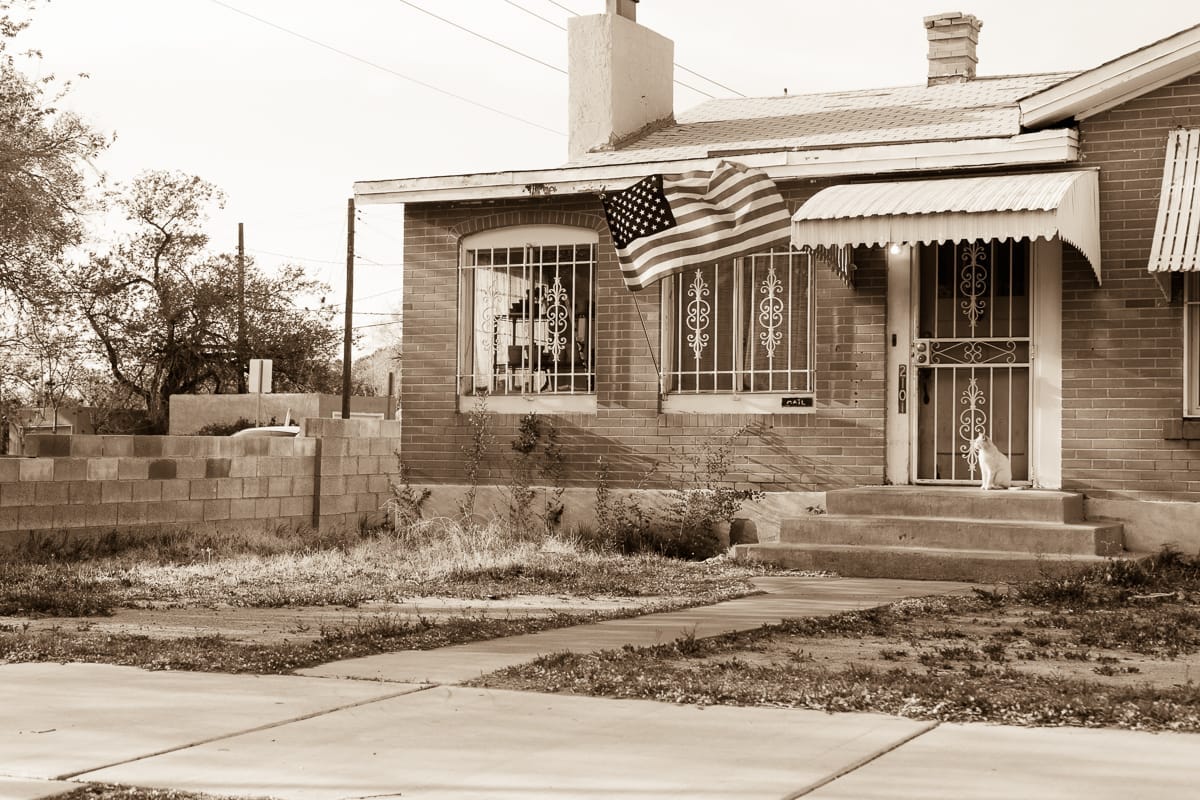
In 2015 I was on exchange at the University of New Mexico studying architecture, which in practice meant riding a bike around a desert city taking photographs and calling it research for a masters level photography class I had talked my way into with the dean’s approval, and one evening a photographer came to give a lecture. His work was infrastructure, most of it on commission for a federal agency, buildings photographed in the weeks before demolition, the last document of them before they stopped existing, and dams, and he had been the final person to photograph things that are simply not there anymore. He spoke about the commission as an honour and it plainly was one to him.
The screen was thirty feet high. Feet, a unit still officially in use in three countries on this planet, the other two being Liberia and Myanmar, both of which have announced they are getting out, and I have been to Myanmar and can neither confirm nor deny. I converted it to nine metres out of habit, or really for this post, and then spent an hour looking at nine metres of black and white photographs instead of the man standing underneath them who had triggered every one of those exposures and was at that moment the least visible object in the theatre. I never once saw his face, which matters later.
I travel with postcards in my laptop sleeve. There is no romantic reason for it, I have just found that if you carry three or four you will eventually use them and if you carry none you never will, so I slid one out and wrote to him. I do not remember which card it was. I remember roughly what I wrote because there was not room for much:
I liked your lecture. Can I come on location next time you go to photograph some monumental American buildings before they get torn down?
And my email address underneath so he had somewhere to reply that was not the postal system. That is the whole thing, no pitch, no CV, no paragraph about how his work had reframed my relationship with the built environment, one compliment and one specific ask, because a postcard will not physically hold anything else.
[image to come: postcard coming out of my laptop sleeve - i checked and its currently empty ]
Then I googled his name and his home address came up, which surprises people and should not. Addresses are barely gatekept, in Germany it is a legal requirement to publish yours on your own website, whereas email addresses are guarded and filtered and sorted into a promotions tab and competed over by every SaaS founder on the planet, myself very much included, while a physical address is usually sitting there in public and the thing that arrives at it is competing with a gas bill. Nobody has ever spammed anyone with handwriting.
I used a Forever stamp that was left over from mailing my student visa back to Washington after I threw it in a bin on the way to a flight to Hawaii, a story I am leaving exactly where it is. A Forever stamp is a small piece of American financial engineering, you buy it at today’s first class rate and it stays valid forever through every future price rise with no top up required, which makes it the only appreciating asset I have ever owned, and it is also priced for a letter rather than a postcard so I overpaid by about fifteen cents to write to a man who photographs buildings in the last week of their lives. The card then travelled roughly 500 metres. He lived across the parking lot that wraps around campus and if I had read the address properly before posting it I could have walked it to his mailbox in ten minutes.
He emailed back and we exchanged a few messages. In my memory he was polite rather than convinced, which is about the right temperature for fan mail from a 23 year old exchange student, and I assumed that was that.
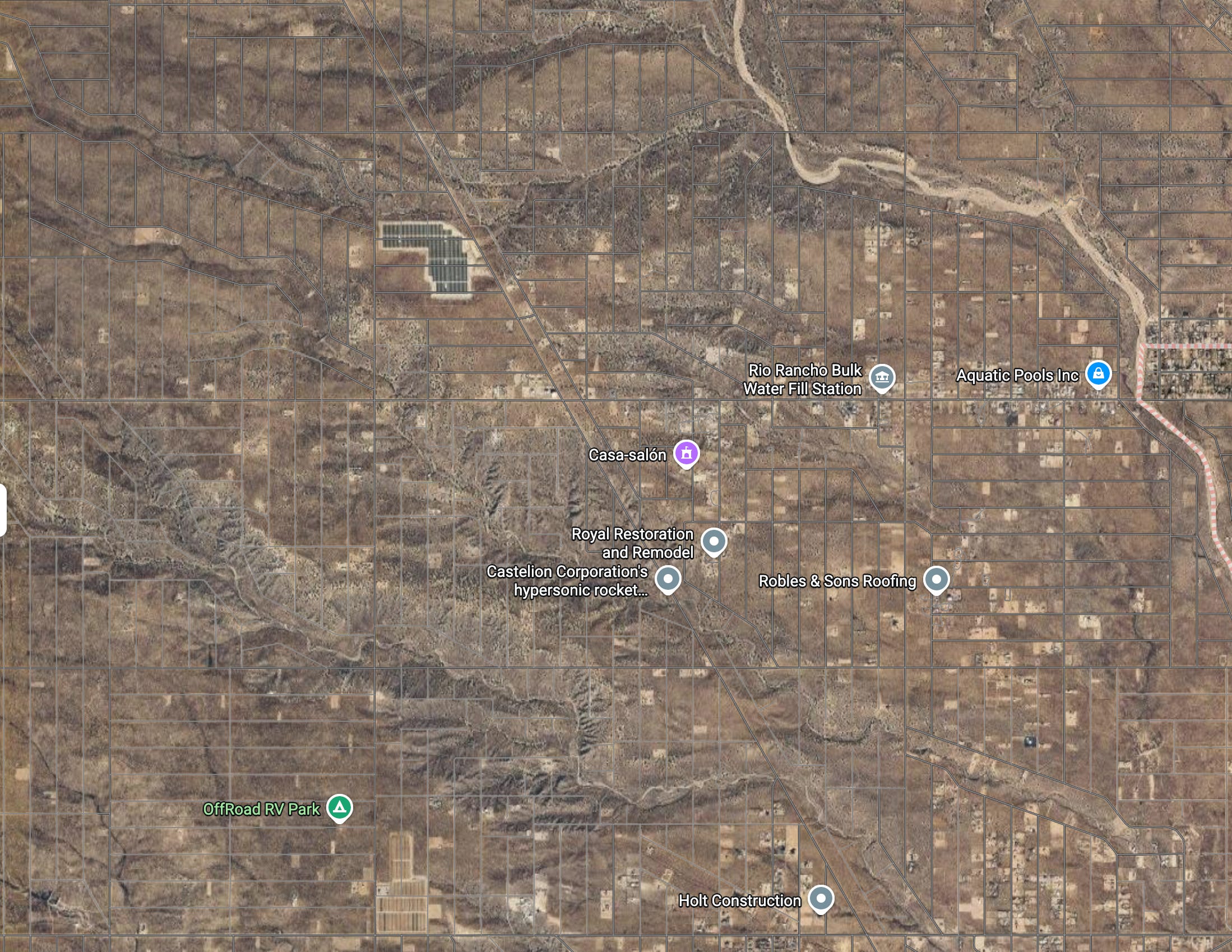
Around the same time I was sitting in a real estate development class taught by a man called Herb. Flying into Albuquerque I had seen something out of the window on the northwest approach, a full street grid pressed into the desert with almost nothing built on it, and Herb was the one who explained it. Rio Rancho. Land sold off by the lot, much of it to people who never saw it, a subdivision that arrived as geometry first and houses much later, if at all. When I mentioned Australian dollars he could not get past the fact that we had our own currency and had also decided to call it dollars. I have thought about his face more often than I have thought about the syllabus.
Four months of work went up on the wall for the end of semester critique. Every week we had been given a theme, shadow, reflection and so on, and I shot all of them and titled each photograph with the street it was taken on. Not the subject. The location.
Mark, my tutor, brought snacks. He had found something at Costco called Aussie Bites, a tub of thirty two organic oat and apricot pucks, on the theory that this would settle the two Australians in the room, and he asked us sincerely whether it was Australian food. Neither of us had seen one in our lives. The ingredients run to quinoa and chia and shredded coconut, which puts them somewhere between Peru and a Bondi juice bar and nowhere near anything either of us grew up chewing, and we ate them anyway.
Then a man in a hat walked up to me before I presented and somehow knew exactly who I was, and I had no idea who he was, because I had only ever seen the back of his head in a dark lecture theatre and up close with a hat on he was a different person entirely. It took me an embarrassing number of minutes. Mark had invited him as the guest critic and nobody had told me, because there was no reason to tell me.
He asked straight away how I had come up with the idea of the postcard, which might be the most honest question anyone has ever asked me, because the truthful answer is that I had not come up with anything, I had a postcard in my laptop sleeve and he had an address.
Then he looked at the wall. I had put up around forty eight photographs on a vertical panel an A1 sheet wide running from the floor to nearly the ceiling, roughly one image for every street between the campus and my place on Mesa Avenue, and he said he liked several of them and then said I should have shown four, maybe six. He was right, and the annoying part is that I had already proved him right earlier that semester without noticing, because the postcard worked precisely because a postcard cannot hold more than two or three sentences, whereas a panel will hold whatever you give it, so I gave it everything.
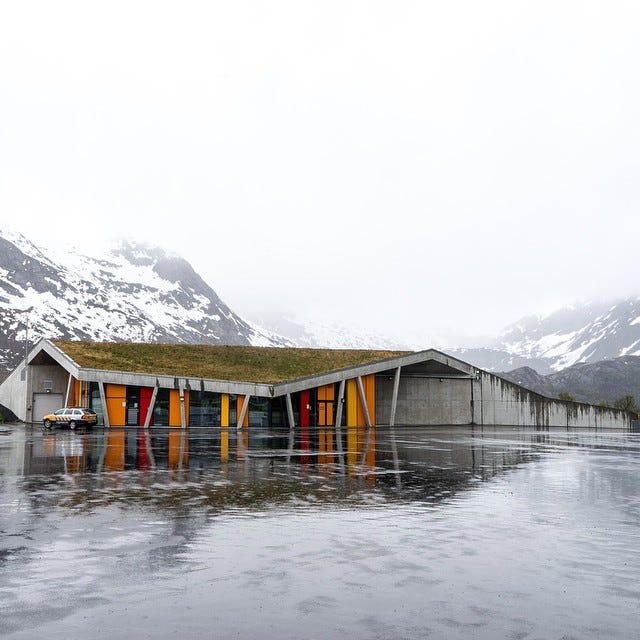
At the end of it he invited me for coffee, nine the next morning, his house, one hour, and it was a Saturday and my last full day in Albuquerque. We did not do one hour. We finished the coffee and got into his Toyota Surf and drove until the end of the afternoon, out to Rio Rancho where I stood in the grid instead of flying over it, then back across town and around again, and I spent most of it looking out of a window I was not used to, because I had been seeing that city at bike height for four months, which is a specific and quite low way to see anywhere, and the Surf sits high, and it turns out a couple of metres of extra elevation is enough to hand you a second set of photographs of a place you thought you had already finished. He bought me empanadas because I had mentioned Norway was next and told me to save my money, it’s expensive there.
Somewhere in all of that he taught me how to actually use my Sony A7. Buy more batteries than you think you need, then buy more. If you are travelling by car the tripod comes, there is no excuse, it is in the car. And the one I still repeat, which is that you are the only person standing in this exact spot at this exact second so you had better make it count, because come back tomorrow and the atmosphere has changed and the light has moved and the photograph you were going to take does not exist anymore.
I have never once carried the tripod. Eleven years later and it is still in my wardrobe. What I do instead is find a wall or a bin or a bollard or the bonnet of a parked car and balance the camera on its lens cap, which works often enough that I have never had to confront the fact that I was handed the correct answer for free and declined it, plus I don’t have a car.
I emailed him now and then for a couple of years afterwards, small updates that were really just notes saying I still exist and it still mattered, and later we swapped books, and then it stopped. I flew to Norway a week later with a different idea of what a photograph was for.
Why I stopped
Obligatory honesty section. Most of the outreach I have sent since has done nothing at all and I do not have a good failure for you, no humiliating reply, no story where it went badly, nothing with a shape to it, just a pile of emails that were never opened, no rejection and no event and nothing to remember.
And for years I told myself there was no particular reason I stopped sending them, but there is a reason. At 23 I had not yet built a version of myself that could be embarrassed, so I wrote to a man I had never met and asked to come to work with him and it did not seriously occur to me that this might be an absurd thing to do. That version of you arrives later, and mine turned up at around the same time as the invoice I cannot bring myself to send and the trial customer I do not chase and the drafts folder, all of which is the same muscle. I did not stop sending postcards because they stopped working. I stopped because I started calculating first.
The other side of it
Almost nothing that arrives is worth anything, it is mostly people selling and you can tell because they have not looked at what I do for longer than it takes to copy an email address, but one was different. A cold DM from a man in the early stages of launching a product who wanted to know about the industry we were both in and whether the thing he was building fit inside it, and we got on a call and I gave him what I thought was reasonably useful feedback and then did not think about it again. He had scheduled around two thousand of those calls. I was one of the early ones. The company is now worth several billion dollars.
Two thousand is the number I want you to sit with because it does something to the survivor bias argument. He did not get lucky on one message, he industrialised it, and the only reason I remember my slot at all is that I happened to be near the front of a queue I did not know I was standing in.
Answered sideways
I never did go on location with him. I asked to stand next to a man while he photographed something in its final week and what I got instead was a Saturday, a Toyota Surf and three pieces of advice, two of which I took with me, and that is the part worth keeping, because you do not get the thing you asked for, you get something next to it, and you only get that because you asked for something specific enough for it to be answered sideways. Which is why “let’s connect” fails. It is not too forward, it is unanswerable, there is nothing adjacent to offer someone who has not told you what they actually want.
So ask for one concrete thing you have no right to and let them hand you something else instead, and say what you are doing out loud while you are at it, repeatedly, to yourself and to anyone who will listen, until it is true by attrition. I told people for years that I did not want to work for anyone, I was not working towards it in any organised way, and it happened largely because I had said it often enough that arranging my life any other way would have been embarrassing. The worst case is that nothing happens, which is also the current case.
I am not in touch with the photographer anymore. I never told him what that Saturday actually did, and by the time I thought to, too much time had gone by for the message to be casual. I still have his address.
Anyway. I am currently on location, and if you want to see more images from Albuquerque, or you just want to reach out, here.